Starbucks Gluten Free Menu Options Revealed
This guide helps you find safe choices and risks for gluten-sensitive customers at Starbucks. It explains which Starbucks gluten free options are ingredient-safe and where cross-contact can occur. The goal is practical: use the app, talk to baristas, and plan ahead.
Starbucks does not offer a certified gluten-free menu in the United States. Many brewed coffees, espresso shots, plain hot or iced lattes made in the cup, brewed teas, lemonades, bottled Frappuccinos, and some sealed snacks are gluten-free by ingredients. But, shared equipment and preparation steps make cross-contact common.
Readers should check the Starbucks allergy-friendly menu details on the app and website before ordering. Ingredient lists update often, and dairy-free milks such as oat milk vary by brand and location. Seasonal items, regional differences, and store practices can change availability.
This piece takes an evidence-based approach and gives clear next steps: confirm ingredients on the app, ask baristas about preparation, and choose sealed items or drinks made directly in the cup when possible. The tone is warm and helpful, aimed at giving you confident, usable guidance for a safer Starbucks visit.
Overview of Starbucks gluten-free approach and allergen policy
Starbucks clearly explains the risks of allergens and how they handle ingredients. They say that unpackaged items might have allergens because they use the same equipment for many things. Customers should always check labels and ask staff about packaged items for sure.
There are cross-contact concerns in stores. Equipment like espresso machines and blenders are used for many items. This means gluten-free ingredients can get trace gluten during preparation. Quick cleaning of the steam wand or shared utensils doesn’t remove all risk.
Starbucks openly talks about its cross-contact policy. They say trace gluten can transfer, even if a recipe doesn’t have gluten. This is key for people with celiac disease or severe sensitivity.
The website and app have full nutrition and ingredient lists for many drinks and packaged goods. But, customizations might not be listed. To see accurate labels for a specific customization, you might need to find a drink that already includes that add-on or ask staff to show packaged ingredient panels.
Because of shared prep and storage, Starbucks does not offer a certified gluten-free menu in the United States. The company considers an item safe only if it’s sealed and labeled gluten-free. Fresh bakery, warmed sandwiches, and oven-warmed items are made with gluten-containing products, which prevents a storewide gluten-free certification.
| Item | Vegan | Keto-Friendly | Gluten-Free | Allergens |
|---|---|---|---|---|
| Brewed Coffee (Pike Place) | Yes | Yes (black) | Yes* | None |
| Espresso Shot | Yes | Yes | Yes* | None |
| Classic Caffè Americano | Yes | Yes | Yes* | None |
| Iced Matcha Latte (prepared) | No (with milk) | No | No* | Dairy, possible cross-contact |
| Packaged Kind Bar | Varies by flavor | Varies by flavor | Yes (if labeled) | Nuts, soy |
| Sealed Bottled Frappuccino | No (dairy) | No | Yes (if labeled) | Dairy, soy |
| Salted Kettle Potato Chips (sealed) | Yes | No | Yes (if labeled) | None |
| Oatmilk Latte (made in cup) | Yes | No | Yes* | Oats, possible cross-contact |
| Frappuccino with Java Chips | No | No | No | Wheat, dairy |
| In-store Warmed Sandwich | No | No | No | Wheat, dairy, eggs |
*Items listed as gluten-free by ingredient can also be exposed to cross-contact in store. Customers with celiac disease should choose sealed, labeled foods and simple brewed drinks. Always ask staff before ordering. Knowing Starbucks’ gluten conscious practices and cross-contact policy helps you make safer choices.
For a formal allergy plan, rely on packaged, labeled products and ask staff to verify ingredient labels. Reading the app’s Full Nutrition & Ingredients List before you go reduces surprises. It helps you make informed decisions about the Starbucks allergy-friendly menu.
starbucks gluten free menu
Many customers search for “starbucks gluten free menu” when they need safe choices. They look for a clear list of gluten-free items. But, Starbucks doesn’t have a certified gluten-free menu in the U.S. Instead, customers pick safe options from ingredient lists and packaged items shown on the app and in stores.
What this phrase means for consumers and searchers
People use this term to find quick answers about safe drinks and snacks. They want to know which items on the Starbucks gluten free food list are low risk. They also check Starbucks gluten free menu availability by location and season.
How to use the app and in-store labels to build a personalized gluten-free order
Open the Starbucks app and tap Order, then pick a store. Browse Menu and select an item. Tap Full Nutrition & Ingredient List, then the Ingredients tab. Check packaging for prepackaged snacks in-store and ask to view labels before buying.
For customizations, compare the desired add-on to another menu item that already includes it. Use the app’s ingredient screens to confirm each addition. Ask the barista to prepare the drink in a fresh cup to reduce surface contact.
| Step | Action | Why it helps | Tip |
|---|---|---|---|
| 1 | Open Order > choose store | Shows local inventory and available packaged items | Pick the exact store you will visit |
| 2 | Select item > Full Nutrition & Ingredient List | Reveals all components that may contain gluten | Scroll to Ingredients tab for specifics |
| 3 | Compare custom add-ons to items that include them | Helps spot hidden sources of gluten | Use ingredient lists side-by-side |
| 4 | Request to view packaging labels in-store | Confirms brand and allergen statements | Packaged snacks change by store |
| 5 | Ask for drink made directly in cup | Reduces risk from shared tools and surfaces | Politely notify barista of gluten sensitivity |
Limitations: regional availability, seasonal changes, and management updates
Starbucks gluten free menu availability varies by store and region. Packaged snacks like Marshmallow Dream Bar, Kind Bars, Hippeas, Justin’s, and Salted Kettle chips appear inconsistently. Relying on a single, static list can lead to surprises.
Seasonal syrups, toppings, and promotional items change often. These shifts can alter which drink customizations remain low risk. Store-level management and supplier updates affect ingredient brands, such as the oat milk supplier, which can change cross-contact risks.
Before ordering, confirm current brands and product status on the app or ask staff in-store. Use the Starbucks gluten free food list from the app as a starting point, then verify Starbucks gluten free menu availability at your chosen location to be safe.
Safest brewed coffee and espresso-based drinks by ingredients
Many classic coffee choices are gluten-free because coffee beans don’t have gluten. This makes brewed coffee gluten-free in its basic form. You can trust Blonde Roast, Pike Place Roast, Dark Roast, and decaf Pike Place Roast as safe choices when ordered plain black.
Espresso shots are also gluten-free by recipe. You can ask for plain espresso, Caffé Americano, and drinks made directly in the cup. An iced latte poured over ice in the cup is a safer choice because it avoids steam-wand use.
Steamed milk increases the risk of cross-contact. Steam wands are cleaned between uses but not sterilized. Drinks made with steamed milk, like hot lattes and cappuccinos, may pick up residues from previous uses. This is a concern for those with strict gluten sensitivity.
If you want a safe drink without sacrificing texture, ask baristas to pour milk into the cup. Or, request iced versions made in the cup. This keeps your drink safe from shared-tool contact.
| Item Name | Description | Calories | Price |
|---|---|---|---|
| Blonde Roast (brewed) | Light-bodied brewed coffee, served black or with milk on request | 5 (black) | $2.25 (Tall) |
| Pike Place Roast (brewed) | Smooth medium roast, classic drip coffee option | 5 (black) | $2.45 (Tall) |
| Dark Roast (brewed) | Full-bodied brewed coffee with robust flavor | 5 (black) | $2.45 (Tall) |
| Decaf Pike Place (brewed) | Decaffeinated medium roast, brewed fresh | 5 (black) | $2.45 (Tall) |
| Espresso (single shot) | Rich concentrated coffee shot, base for many drinks | 5 | $1.95 |
| Caffé Americano | Espresso with hot water, simple and ingredient-clean | 15 (with water) | $2.65 (Tall) |
| Iced Latte (made in cup) | Espresso poured over milk and ice in the serving cup | 120 (Tall, with 2% milk) | $3.45 (Tall) |
| Hot Latte (steamed milk) | Espresso with steamed milk; higher cross-contact risk | 150 (Tall, with 2% milk) | $3.65 (Tall) |
| Iced Americano | Espresso with cold water and ice, low cross-contact risk | 15 | $2.95 (Tall) |
| Espresso Macchiato (single) | Espresso with a light milk foam mark; involves steam wand | 15 | $2.75 |
| Cold Brew | Slow-steeped cold coffee; brewed and sealed at store | 5 (black) | $3.25 (Tall) |
| Brewed Coffee with Milk Pour | Barista pours milk into cup instead of steaming over wand | 35 (with skim milk) | $2.95 (Tall) |
| Americano with Milk (made in cup) | Espresso and water, milk added in cup on request | 35 (with skim milk) | $3.15 (Tall) |
| Decaf Americano | Decaf espresso with hot water, suitable for sensitive customers | 15 | $2.95 (Tall) |
| Espresso Con Panna | Espresso topped with whipped cream; cream is a dairy allergen | 50 | $2.95 |
| Iced Flat White (made in cup) | Ristretto shots over cold milk and ice prepared in cup | 140 (Tall, whole milk) | $3.75 (Tall) |
| Hot Chocolate | Cocoa-based drink with steamed milk; high cross-contact risk | 240 (Tall) | $3.45 (Tall) |
| Cold Foam Topping (separate) | Cold foam added in cup; no steam wand involved | 20 | $0.60 |
| Bottled Starbucks Drink (sealed) | Factory-sealed bottled beverages with labeled ingredients | Varies | $2.95+ |
Remember, brewed coffee’s gluten-free status is based on ingredients alone. But, cross-contact is a concern for those with celiac disease. Choosing espresso-based drinks made directly in the cup lowers the risk. Always talk to your barista about how your drink will be made for the most confidence.
Gluten conscious Starbucks drinks: iced, bottled, and matcha options
For those who can’t have gluten, Starbucks has cold drinks that are safe. Cold Brew, Iced Americano, and iced espresso are gluten-free if no gluten powders are added. Making drinks in the cup is safer because it avoids shared shakers and blenders.
Below is a list of common iced and bottled drinks. Bottled drinks have clear labels, making it easier to choose gluten-free options. They are also safer because they come sealed and untouched.
| Item Name | Description | Calories | Price |
|---|---|---|---|
| Cold Brew | Smooth, slow-steeped coffee served over ice; order without flavor pumps | 5 | $3.25 |
| Iced Americano | Espresso with cold water poured over ice; no milk or syrups by default | 10 | $2.95 |
| Iced Caffè Latte | Espresso with milk and ice; request made in cup to avoid shaker use | 120 (with 2% milk) | $4.25 |
| Iced Flat White | Ristretto shots with whole milk over ice; order in cup to limit contact | 170 | $4.45 |
| Iced Chai Latte | Black tea concentrate blended with milk; avoid if shaken with mix-ins | 200 (with 2% milk) | $4.25 |
| Bottled Starbucks Frappuccino | Sealed coffee drinks with full ingredient label; many are gluten-free by ingredients | 190 | $2.99 |
| Bottled Doubleshot Espresso | Canned espresso and milk combination with ingredient list on label | 120 | $2.79 |
| Bottled Cold-Pressed Juice | Sealed juice with transparent ingredient panel; naturally gluten-free items | 80 | $3.49 |
| Iced Matcha Latte | Fine green tea powder with milk and ice; ask for direct-in-cup prep to limit cross-contact | 240 (with 2% milk) | $4.45 |
| Ready-to-drink Bottled Tea | Presealed teas with ingredient labels; low cross-contact risk when unopened | 0–90 | $2.79 |
Matcha powder at Starbucks is gluten-free by ingredients. The main issue is how it’s prepared. Matcha lattes are often mixed in shakers or blenders that may have touched other powders. Ask baristas to prepare your matcha directly in the cup or use a freshly sanitized shaker.
For certainty, choose bottled Frappuccinos and canned drinks. Bottled Frappuccinos are gluten-free, but check the label. Sealed packaging reduces cross-contact risk and makes ingredient lists clear for those with gluten sensitivities.
Ordering tips can make your drink safer: ask for drinks made in the cup, request washed or sanitized shakers, and avoid add-ins like cookie crumbles or malt powders. These steps help you enjoy iced coffee, bottled drinks, and matcha with confidence as part of gluten-conscious Starbucks options.
Starbucks syrups, sauces, and toppings: what is gluten-free by ingredient
Many Starbucks flavorings are gluten-free by ingredient. But, cross-contact and recipe changes can affect safety. Here’s a guide to common syrups, sauces, and toppings to help you make informed choices.
| Item Name | Description | Calories | Price |
|---|---|---|---|
| Vanilla Syrup | Classic vanilla flavor; available sugar-free version | 20 per pump | $0.60 per pump |
| Caramel Syrup | Sweet caramel note for lattes and cold drinks | 20 per pump | $0.60 per pump |
| Mocha Sauce | Chocolate-based sauce used in mochas and drizzle | 80 per pump | $0.70 per pump |
| Peppermint Syrup | Seasonal mint flavor for holiday drinks | 20 per pump | $0.60 per pump |
| Cinnamon Dolce Syrup | Warm cinnamon-sugar profile for hot drinks | 20 per pump | $0.60 per pump |
| Hazelnut Syrup | Nutty sweet syrup for flavored lattes | 20 per pump | $0.60 per pump |
| White Mocha Sauce | Sweet, creamy white chocolate flavor | 90 per pump | $0.70 per pump |
| Simple Syrup | Neutral sweetener for iced drinks | 20 per pump | $0.50 per pump |
| Coconut Syrup | Tropical flavor for seasonal drinks | 20 per pump | $0.60 per pump |
| Caramel Drizzle | Buttery caramel topping with natural flavors | 40 per drizzle | $0.50 |
Most items in the table are gluten-free by ingredients. Use the Starbucks app and in-store labels to confirm current formulations before ordering. If you need a quick keyword check while searching, phrases like Starbucks syrups gluten free and Starbucks gluten free sauces appear in ingredient notes and product descriptions.
Toppings and mix-ins to avoid
| Item Name | Description | Calories | Price |
|---|---|---|---|
| Cookie Crumble | Crunchy cookie pieces used on Frappuccinos and cold foam | 70 per scoop | $0.75 |
| Java Chips | Small chocolate chips with wheat-based ingredients | 80 per scoop | $0.75 |
| Frappuccino Chips | Chocolate-based chips used in blended beverages | 85 per scoop | $0.75 |
| Malt Powder | Used in some chocolate cold foams and blended drinks | 60 per scoop | $0.60 |
| Chocolate Cookie Pieces | Large cookie chunks for texture and garnish | 90 per scoop | $0.80 |
| Cocoa Topping with Malt | Powdered topping that may include barley malt | 50 per sprinkle serving | $0.40 |
| Flavored Sprinkles | Decorative sprinkles that can contain wheat | 30 per serving | $0.40 |
| Oat-Based Crunch | Crunchy inclusion that may contain oats with gluten | 65 per scoop | $0.70 |
| Granola Garnish | Sweetened oat clusters often sold as bakery addition | 120 per serving | $1.25 |
| Chocolate Drizzle with Malt | Drizzle that can include malt-derived ingredients | 45 per drizzle | $0.50 |
These items are common Starbucks toppings to avoid. They contain wheat, barley malt, or cookie crumbs that pose both ingredient and cross-contact risks. Blended drinks and cold foams often mix these toppings in shared containers or shakers.
Natural flavors and ingredient changes
“Natural flavors” can come from many sources. Suppliers may alter formulas without broad notice. Current ingredient lists often show no gluten grains, but disclosure rarely names the exact source.
Check the app right before ordering. Ask staff to show packaged labels when possible. This practice reduces surprise changes and helps you decide if Starbucks gluten free sauces remain safe for your needs.
Quick ordering tips
- Request syrups and sauces be poured directly into your cup.
- Avoid toppings listed under Starbucks toppings to avoid on blended items.
- When in doubt, choose plain syrups or sealed beverages.
Dietary table
| Items | Vegan | Keto-Friendly | Gluten-Free | Allergens (Nuts, Dairy, etc.) |
|---|---|---|---|---|
| Vanilla Syrup | Yes | No | Yes | None listed |
| Caramel Drizzle | No | No | Yes | Dairy |
| Mocha Sauce | No | No | Yes | Dairy |
| Peppermint Syrup | Yes | No | Yes | None listed |
| White Mocha Sauce | No | No | Yes | Dairy |
| Cookie Crumble | No | No | No | Wheat, Dairy |
| Java Chips | No | No | No | Contains wheat |
| Malt Powder | No | No | No | Barley-derived |
| Simple Syrup | Yes | No | Yes | None listed |
| Caramel Syrup | Yes | No | Yes | None listed |
Use this information with on-site ingredient labels. When searching, terms like Starbucks syrups gluten free and Starbucks gluten free sauces help locate product notes. Keep safety a priority by confirming current ingredient lists each visit.
Next steps: choose plain syrups or sealed beverages if you need the lowest risk. Ask staff about preparation and request no shared scoops or topping shakers when ordering.
Gluten free options at Starbucks for snacks and packaged food
Starbucks has a selection of sealed items with low cross-contact risk. You can find these near the checkout, labeled for gluten-free diets. These packaged goods are great for busy days or travel, as they avoid unknowns in the pastry case.
Here’s a list of common packaged items. It’s easy to compare calories and prices while checking for allergens. But remember, availability can change by store and region, so always check labels.
| Item Name | Description | Calories | Price |
|---|---|---|---|
| Marshmallow Dream Bar | Rice Krispie–style treat with marshmallow; commonly labeled gluten-free in US/Canada | 200 | $2.79 |
| Kind Bar (selected) | Nuts and fruit bars; some varieties carry gluten-free label—check packaging | 180 | $2.49 |
| Hippeas Chickpea Puffs | Crispy chickpea snacks with simple seasoning; often labeled gluten-free | 130 | $1.99 |
| Justin’s Dark Chocolate Peanut Butter Cups | Single-serve cups with clear gluten-free labeling on many SKUs | 220 | $2.69 |
| Salted Kettle Potato Chips | Short-ingredient, sealed bag; frequently marked gluten-free | 150 | $1.99 |
| Bottled Juice (selected) | Sealed fruit juices with full ingredient lists and allergen info | 120 | $3.29 |
| Horizon Organic Milk (bottled) | Sealed dairy carton where stocked; labeled and low risk for gluten | 150 | $2.49 |
| Sealed Yogurt Cup (national brands) | Branded yogurt with printed ingredient list and gluten-free declarations when applicable | 110 | $2.99 |
| Protein Snack Bars (selected) | Some protein bars are labeled gluten-free; read the package before buying | 200 | $2.99 |
| Nut Packs (branded) | Single-serve roasted nuts with clear ingredient panels and low contamination risk | 170 | $2.29 |
Packaged gluten-free snacks from Starbucks are a safe choice. Labels clearly show ingredients and allergens. You can add these to your gluten-free food list for shopping.
But be careful with the pastry case. Gluten-free pastries are rare and stored with breads and cookies. Sandwiches, protein boxes, and bakery items share ovens and utensils, increasing cross-contact risk.
Always choose sealed items with clear labels. A quick check at the counter helps: look for a gluten-free claim, read the ingredients, and confirm the brand. This approach avoids surprises and keeps your choices safe.
Best gluten free items at Starbucks for celiac and gluten-sensitive customers
For those with celiac disease or gluten sensitivity, finding safe options at Starbucks is easier. This guide lists top drinks and snacks with low risk of gluten exposure. It also offers tips for ordering safely.
Top-rated low-risk drinks and sealed snacks to order
Items that are simple, sealed, or made from one ingredient are safest. Brewed coffees like Blonde Roast and Pike Place Roast, and Caffé Americano are good choices. Bottled drinks and sealed snacks also have less risk of cross-contamination.
| Item Name | Description | Calories | Price |
|---|---|---|---|
| Blonde Roast (Brewed) | Mild, bright brewed coffee made to order in the pot | 5 | $2.45 |
| Pike Place Roast (Brewed) | Balanced medium-roast brewed coffee, consistent flavor | 5 | $2.25 |
| Caffé Americano | Espresso shots topped with hot water; no milk required | 10 | $2.95 |
| Iced Caffé Latte (made in cup) | Espresso poured over ice, milk added directly to cup | 120 (with 2% milk) | $3.95 |
| Cold Brew (no foam) | Slow-steeped cold brew from separate tap or container | 5 | $3.45 |
| Bottled Vanilla Frappuccino | Sealed glass bottle with declared ingredients | 200 | $2.95 |
| Marshmallow Dream Bar | Pre-packaged gluten-free treat sold in store | 170 | $1.99 |
| Kind Bar (select flavors) | Sealed nut and fruit bars; check label for gluten-free mark | 200 | $2.29 |
| Salted Kettle Potato Chips | Sealed bag with clear ingredient list | 150 | $1.89 |
| Sealed Bottled Juice | Single-serve pressed juices with ingredients listed | 80–150 | $3.49 |
Examples of safer hot and cold orders with suggested customizations
Iced Caffé Latte made in cup is a favorite for lower cross-contact risk. Ask that espresso and milk be assembled directly into a clean cup. Choose almond or certified oat milk and confirm brand on the app before ordering.
Cold Brew without foam reduces handling; cold-brew systems are often separated from steam wands and blenders. Hot Americano is a short order with espresso and water, avoiding milk and steam wand contact.
When you want a ready-to-drink option, pick bottled Vanilla Frappuccino or sealed juices. Labels provide ingredient transparency and lower the chance of cross-contact from shared tools.
User tips from the gluten-sensitive community and common tolerated choices
Many customers request drinks made in the cup and ask staff to use a sanitized shaker or a new disposable cup for mixing. Visiting during off-peak hours gives baristas more time to follow special prep requests.
Community-tested Starbucks gluten sensitive choices include plain brewed coffee, Americano, and sealed snacks such as Marshmallow Dream Bar and select Kind Bars. Always check the Starbucks app for the latest Starbucks gluten free menu recommendations and confirm ingredient lists before purchase.
- Ask for drinks prepared in the cup when possible.
- Request a sanitized tool or a new disposable pitcher.
- Bring a personal shaker for matcha if you regularly use it.
- Check the app for ingredient updates and confirmed milk brands.
- Prefer sealed items for the lowest cross-contact risk.
- Choose simple drinks with minimal components.
- Communicate your needs clearly and politely to the barista.
This section highlights practical, low-risk choices and real user strategies. Use the list to narrow options and apply Starbucks gluten sensitive choices while relying on Starbucks gluten free menu recommendations for ingredient verification.
How to order safely: minimizing cross-contact and communicating with baristas
Ordering gluten-free at Starbucks is easy with a few steps. You can reduce cross-contact risk and keep your drink choices simple. Just use quiet, polite requests and check the ingredient info before you go.
Ask the staff to make your drink directly in the serving cup. Say “please prepare this in the cup” and “may I have a freshly sanitized tool.” For matcha or shaken drinks, ask for a just-washed shaker or one that’s been run through the dishwasher.
Visit during off-peak hours and order inside when possible. Talking in person lets you confirm brands and watch preparation. This way, you can point out special handling needs.
Use the Starbucks app or website to view the Full Nutrition & Ingredient List before you arrive. Customizations might not show up accurately, so verify syrups, toppings, and milk choices with the barista. If oat milk matters to you, ask which brand the store uses that day.
Oatly is often certified gluten-free, but Starbucks may use other oat milk brands at some locations. Starbucks oat milk gluten-free notes are useful to mention when ordering. Say: “Which oat milk is being used today?” and “Please use the labeled oat milk pitcher or a clean one.”
Keep orders simple to limit contact points. Plain brewed coffee, an Americano, or a latte made in the cup cuts exposure. If you want flavor, ask for pumps of syrup added directly to the cup.
Below is a quick-reference table to guide in-store requests and choices.
| Item Name | Description | Calories | Price |
|---|---|---|---|
| Pike Place Roast (Brewed) | Hot brewed coffee, served in cup, no additives | 5 | $2.45 |
| Blonde Roast (Brewed) | Mild, light-roast coffee brewed fresh | 5 | $2.45 |
| Caffè Americano | Espresso shots topped with hot water, made in cup | 15 | $2.95 |
| Hot Latte (plain) | Espresso with steamed milk, request in-cup prep | 120 | $3.95 |
| Iced Americano | Espresso poured over ice, minimal contact | 15 | $3.25 |
| Iced Latte (plain) | Espresso and milk over ice, ask for cup preparation | 120 | $4.25 |
| Cold Brew (plain) | Slow-steeped cold brew served in cup or bottle | 5 | $3.95 |
| Bottled Frappuccino | Sealed, ready-to-drink option with label | 160 | $2.95 |
| Oatly Oat Milk (small pour) | Oat milk option; confirm brand at counter | 120 | $0.80 |
| Sealed Snack (Kind Bar) | Individually wrapped snack with ingredient label | 200 | $1.99 |
- Bring any medical notes if you feel more comfortable explaining celiac needs.
- Watch the handoff and ask for a lid change if a shared surface was touched.
- Keep your requests short and friendly; staff aim to help when given clear steps.
Following these Starbucks gluten free ordering tips and pre-check routines helps you lower risk. Being polite and specific about sanitized tools and oat milk lets staff meet your request efficiently. Use the app to prep, then confirm details in person for the safest outcome.
High-risk items and clear avoid list for gluten-sensitive customers
For those with celiac disease or gluten sensitivity, knowing what to avoid at Starbucks is key. This guide points out common cross-contact points and specific items to steer clear of. Remember, even gluten-free items can become unsafe if they’ve been handled by gluten-containing foods.
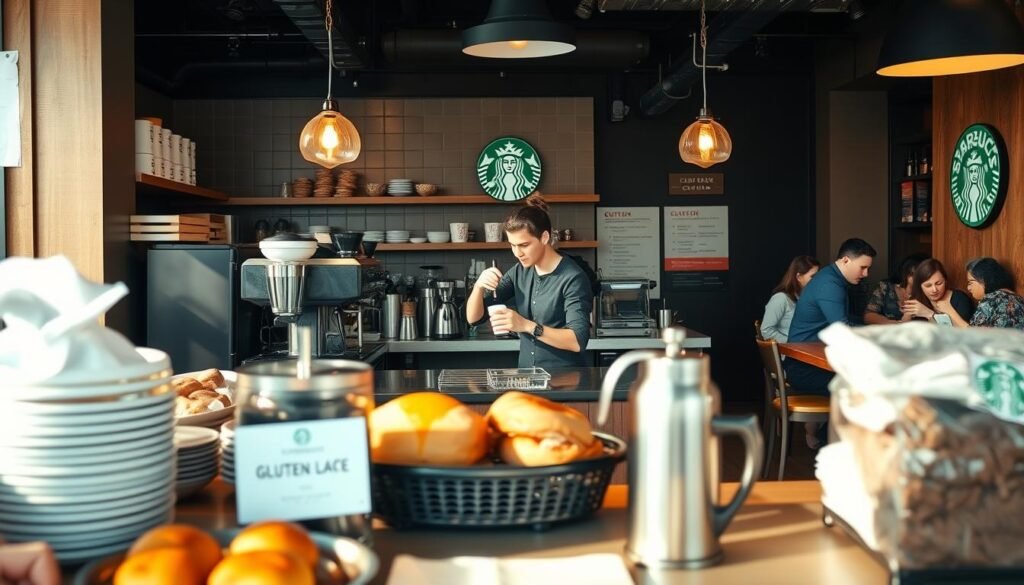
Drinks like Frappuccinos and shaken espresso are big risks. They’re made in blenders or shakers also used for gluten-containing foods. This means these appliances can carry gluten residue, making them high-risk for contamination.
Ask for your drink to be made in a cup when possible. This reduces the chance of cross-contamination. But, remember, these drinks are high-risk and best avoided.
Toppings and mix-ins are obvious risks. Java chips, Frappuccino chips, cookie crumble, and malt powder all contain gluten. They’re used in drizzles, cold foams, and Frappuccino blends. Decline any toppings or mix-ins with these ingredients to avoid gluten.
Oven-baked goods and warmed items are major contamination sources. Pastries, warmed sandwiches, and bakery items share ovens and utensils with gluten foods. Treat these items as unsafe for strict gluten-free diets.
Other high-risk practices include using the steam wand for milk and shared condiment stations. Steamed milk can pick up gluten if the wand isn’t cleaned properly. Condiment areas with shared spoons and packets can also spread crumbs. These are common sources of gluten contamination at Starbucks.
| Item Name | Description | Calories | Price |
|---|---|---|---|
| Caramel Frappuccino (Blended) | Blended coffee drink often mixed with Frappuccino chips or cookie inclusions on request | 370 | $4.95 |
| Java Chip Frappuccino | Contains java chips; prepared in blender shared with other items | 440 | $5.25 |
| Shaken Espresso Drinks | Shaken with syrups in shared shakers; cross-contact risk is high | 150 | $3.95 |
| Iced Matcha Latte (Shaken) | Matcha powder mixed and shaken; shaker contamination possible | 240 | $4.45 |
| Chocolate Cold Foam | Can contain malt powder or chocolate mixes with gluten traces | 70 | $0.75 (add-on) |
| Warm Ham & Swiss Sandwich | Warmed in shared ovens; bread handling near pastries | 480 | $6.99 |
| Butter Croissant | Bakery item displayed near other pastries; shared tongs used | 260 | $2.95 |
| Cookie Crumble Topping | Used on Frappuccinos and cold foam; contains wheat ingredients | 50 | $0.50 (add-on) |
| Bottled Frappuccino (Sealed) | Manufactured and sealed; low cross-contact risk when label checked | 220 | $2.95 |
| Packaged Kind Bar | Sealed snack option with labeled ingredients; safer choice | 200 | $1.99 |
| Items | Vegan | Keto-Friendly | Gluten-Free | Allergens (Nuts, Dairy, etc.) |
|---|---|---|---|---|
| Bottled Frappuccino (Sealed) | No | No | Yes (label confirms) | Dairy |
| Kind Bar | Some varieties | Some varieties | Yes (labeled) | Nuts |
| Hippeas Chickpea Puffs | Yes | No | Yes (sealed) | Legumes |
| Marshmallow Dream Bar | No | No | Yes (packaged) | Dairy, Soy |
| Salted Kettle Potato Chips | Yes | Yes | Yes (sealed) | No major allergens |
| Java Chip Frappuccino | No | No | No | Dairy, Soy |
| Warm Breakfast Sandwich | No | No | No | Eggs, Dairy, Wheat |
| Cookie Crumble Topping | No | No | No | Wheat, Soy |
| Shaken Iced Tea with Syrup | Yes (without milk) | Yes | Potential cross-contact | Varies by syrup |
| Espresso (in-cup) | Yes | Yes | Yes (when ordered in-cup) | No major allergens |
- Avoid blended Frappuccinos and shaken beverages when possible.
- Skip any add-ins that list java chips, cookie crumble, or malt powder.
- Do not order warmed sandwiches or bakery items from the pastry case.
- Request in-cup preparation and sanitized tools if you must order higher-risk items.
- Choose sealed snacks and bottled drinks after checking labels for ingredients.
Knowing what to avoid at Starbucks can help you stay safe. Keep this list handy and tell baristas about your gluten concerns. Being aware of high-risk items and contamination sources helps you make better choices every time you visit.
Conclusion
This Starbucks gluten free menu conclusion highlights a key point. Many drinks and some snacks are gluten-free by ingredient. But, shared equipment and no certified gluten-free menu in the US are concerns. For those with celiac disease, cross-contact is the main risk to think about.
To minimize risk, choose brewed coffee, Americanos, and bottled or sealed drinks. Also, go for labeled packaged snacks. Use the Starbucks app to check ingredients and ask the barista about preparation. This includes using specific brands like oat milk and asking for in-cup preparation.
This summary gives clear steps to enjoy Starbucks safely. First, verify ingredients and communicate your needs. When possible, choose sealed items. Many gluten-sensitive customers can enjoy Starbucks with care. But, those with celiac disease should consider the cross-contact risk and might want to bring prepped drinks or stick to packaged options.
For a final plan, follow this advice: pick low-risk items and confirm details on the app. Always speak up about how your drink is prepared. And, prioritize sealed foods. These steps help you make safer choices without losing the convenience of a neighborhood Starbucks visit.
FAQ
What does “Starbucks gluten free menu” actually mean?
It means looking for gluten-free options at Starbucks. In the U.S., Starbucks doesn’t have a certified gluten-free menu. But, many drinks and some snacks are gluten-free by ingredients.
Yet, there’s a risk of cross-contact from shared equipment. So, customers need to pick safe choices themselves, using ingredient lists and labels.
Does Starbucks guarantee any in-store items are allergen‑free?
No. Starbucks can’t promise that unpackaged items are allergen-free. This is because they use shared equipment for storage, preparation, and service.
Equipment like espresso machines and shakers are shared. This means there’s a risk of cross-contact.
Which Starbucks drinks are lowest risk by ingredients?
Brewed coffees and plain espresso shots are gluten-free by ingredients. Caffé Americano and simple drinks made directly in the cup are also gluten-free by ingredients.
Bottled/canned Starbucks beverages with labeled ingredients are also lower risk.
Which common Starbucks drinks pose higher cross‑contact risk?
Hot lattes, cappuccinos, and flat whites are at higher risk. This is because steam wands are wiped, not sterilized, between uses.
Blended and shaken beverages, like Frappuccinos and iced teas, are also high risk. They’re prepared in shared blenders or shakers.
Are syrups, sauces, and matcha safe for someone avoiding gluten?
Many syrups and sauces are gluten-free by ingredient. Matcha powder is generally gluten-free too. But, matcha lattes and shaken drinks can be contaminated.
Natural flavors and supplier changes can alter formulations. Always check the app or package labels for current ingredients.
Which packaged snacks at Starbucks are reliably safer choices?
Sealed, labeled items like Marshmallow Dream Bars and Kind Bars are often gluten-free. Hippeas, Justin’s peanut butter cups, and Salted Kettle Potato Chips are also gluten-free.
Availability can vary by location and season. Always check the package label in-store.
How should I use the Starbucks app and in-store labels to avoid gluten?
Use the app to order and check ingredients. Choose a store, select an item, and view its nutrition and ingredients. For customizations, find a menu item that already includes that add-on.
Always request to view labels for prepackaged items. Confirm current milk or oat milk brands at the store.
What are the best practices to minimize cross‑contact when ordering?
Ask for drinks to be prepared directly in the serving cup. Request a freshly washed or sanitized shaker/blender if needed.
Avoid toppings with gluten. Visit during off-peak hours. Order inside to discuss preparation and confirm brands with staff.
Should customers with celiac disease eat from the pastry case or warmed items?
No. In-store baked goods and warmed items are prepared near gluten-containing foods. They’re not labeled as allergen-free.
Customers with celiac disease should avoid them. Instead, choose sealed, labeled foods and simple drinks prepared without shared equipment.