Outback Steakhouse Bread: Secrets Unveiled
Outback Steakhouse bread is loved for its warm, honey-tinted crumb and soft crust. People often look for a recipe or the exact formula used by Outback. But, recipes published by restaurants might not match what you get at the table.
Technique, freezing, and finishing touches can change the bread’s texture and taste. This is as important as the ingredients themselves.
A popular home version, called Aunt Jo’s, includes eggs, molasses, brown sugar, and butter. It also has two packets of dry yeast, warm water, and a mix of whole wheat and white flour. This recipe makes several mini loaves after a one- to two-hour rise and a 45-minute second rise. The loaves are baked at 375°F and brushed with butter after baking.
Outback serves small loaves, not single rolls, with whipped butter. They use frozen dough for consistency. The loaf’s honey and molasses balance, on a whole wheat and bread flour base, is why many recipes focus on these elements.
This article will guide you through making the iconic Outback honey-wheat loaf. You’ll learn about the bread’s iconic qualities, likely ingredients and techniques, and top copycat sources. We’ll also cover nutrition, allergens, and tips for baking at home. You’ll see how restaurant methods compare to home baking to create your own Outback bread recipe.
What Makes Outback Steakhouse Bread Iconic
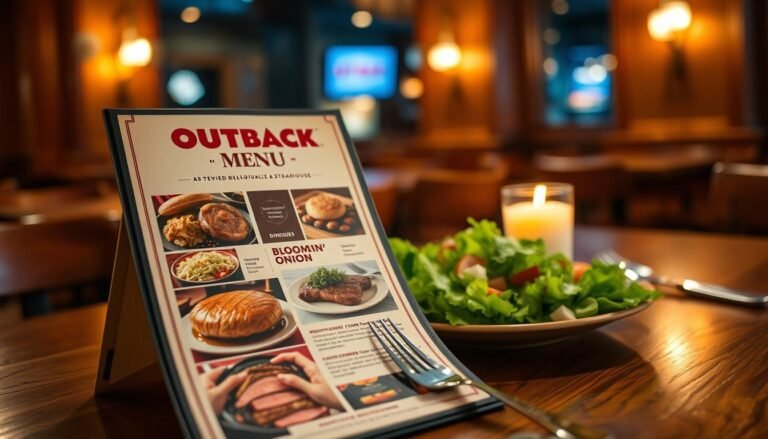
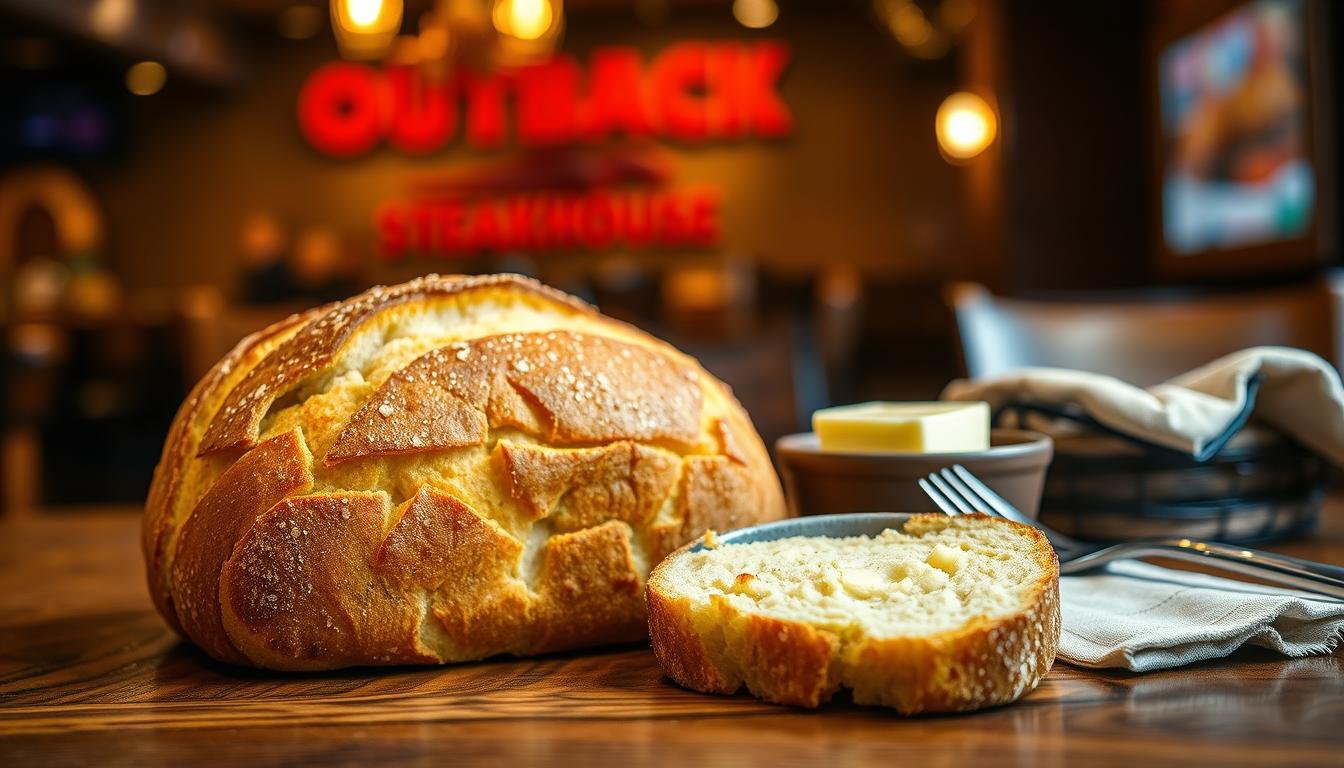
The warm bread that comes to your table is as unforgettable as the main dish. Outback Steakhouse bread is deep brown and has a soft crust. It’s cut into small, rustic loaves, perfect for sharing or enjoying alone.
The bread’s color and smell hint at molasses and honey for sweetness. It’s made with whole wheat and bread flour for a nutty taste. The inside stays soft, with a wheat scent and a sweet aftertaste that goes well with savory foods.
Pairing the bread with a light whipped butter is a simple yet effective move. This adds creaminess and balances out the molasses. The consistent size and crust across locations suggest frozen dough is used.
Here’s a quick look at the bread’s visual and flavor highlights, how it’s portioned, and how it’s served.
| Item Name | Description | Calories | Price |
|---|---|---|---|
| Mini Wheat Loaf | Rustic miniature loaf with tender crust and soft crumb; sliced for sharing | 220 per loaf | Complimentary with entree |
| Whipped Butter | Light, whipped butter served room temperature to spread easily | 90 per serving | Included |
| Honey-Molasses Profile | Mild sweetness from honey and molasses with a nutty wheat backbone | — | — |
| Presentation Style | Two or three mini loaves per table, encouraged for tearing at table | — | — |
| Crust | Tender, slightly chewy exterior with deep brown color | — | — |
| Crumb | Soft, structured interior that holds spreads well | — | — |
| Serving Temp | Served warm to enhance aroma and spreadability | — | — |
| Texture | Balanced: springy yet tender, resists becoming dense | — | — |
| Typical Pairing | Steaks, soups, and salads; bread offsets rich sauces | — | — |
| Uniformity | Consistent size and color across locations due to prep methods | — | — |
When the small loaves arrive, look for the brown crust and mild sweetness. The first tear and butter spread make outback bread unforgettable. It’s often as memorable as the main course.
outback steakhouse bread: history and restaurant context
Outback Steakhouse made a small loaf of bread a big deal. It came warm with whipped butter, setting the stage for a big meal. This simple act made guests look forward to their steaks and sides.
The bread was made of wheat, not plain white, to match Outback’s bold image. It had a denser texture and darker crust, perfect for grilled beef. Ingredients like honey and molasses made it taste like home.
How the loaf became part of the Outback dining experience
Table bread is a way for restaurants to show they care. Outback’s small loaf became a special moment for guests. It was the perfect size for sharing and made diners want to stay longer.
Outback’s use of frozen dough helped keep the bread consistent everywhere. This made the bread a must-have for every visit.
Comparison to other table breads at casual steakhouse chains
Outback and Texas Roadhouse have different breads. Texas Roadhouse serves soft, honey-cinnamon buttered white rolls. These rolls are all about being soft and sweet.
Outback’s wheat loaves are more rustic. They have a darker crumb and a hint of sweetness. People say Outback’s bread is heartier, while Texas Roadhouse’s is sweeter.
| Item Name | Description | Calories | Price |
|---|---|---|---|
| Outback Mini Wheat Loaf | Hearty miniature wheat loaf with honey and molasses notes | 180 per loaf | $0.75 (per bread served) |
| Texas Roadhouse Dinner Roll | Buttery white roll, warm and soft, served with honey-cinnamon butter | 140 per roll | $0.65 (per roll served) |
| Chili’s Cornbread | Sweet cornbread muffin, moist and crumbly | 220 per muffin | $1.00 (per serving) |
| Olive Garden Breadstick | Long, soft stick brushed with garlic butter | 120 per stick | $0.50 (per stick) |
- outback bread history reflects a strategy of consistency and brand reinforcement through a single menu touchpoint.
- Operational methods like frozen dough favor standardization across many locations.
- outback vs texas roadhouse bread frames two distinct guest promises: rustic wheat comfort versus buttery roll indulgence.
Typical ingredients in Outback bread and why they matter
This part breaks down the core components that give the mini loaves their color, flavor, and texture. Knowing these outback bread ingredients helps you match the restaurant loaf at home or tweak recipes for personal taste.
Whole wheat and bread flour
Whole wheat gives the loaf its darker hue and nutty flavor. It makes the crumb slightly denser and the mouthfeel heartier, which many expect from Outback-style bread.
Bread flour, with its higher protein, boosts gluten development. This structure yields a chewier bite and stable, sliceable loaves. A mix of whole wheat and bread flour balances softness with wheat character for an authentic crumb.
Molasses and honey
Molasses gives the loaf a deep brown color and a mild bitter-sweet backbone. It holds moisture, keeping the loaf tasting fresh longer and the crumb tender.
Honey adds floral sweetness and supports glossy crust browning during baking. Using both molasses and honey explains the mellow sweet profile of outback honey wheat bread while preserving shelf life and color depth.
Yeast, eggs, butter, and other enrichments
Yeast creates lift and open crumb. Many home copycat recipes add eggs to enrich the dough; eggs contribute tenderness and a slightly richer texture.
Butter supplies softening fat and a rounded flavor that makes the crust less hard. Brown sugar appears in some blends to deepen sweetness and enhance caramel color.
| Item Name | Description | Calories | Price | |
|---|---|---|---|---|
| Mini Wheat Loaf | Blend of whole wheat and bread flour, molasses, honey, butter | 200 kcal | $2.50 | |
| Honey-Enhanced Mini | Higher honey ratio for brighter sweetness and crust color | 210 kcal | $2.75 | |
| Egg-Enriched Loaf | Eggs added for richer crumb and softer texture | 220 kcal | $3.00 | |
| Butter-Brushed Mini | Finished with melted butter for glossy crust and flavor | 230 kcal | $3.25 | |
| Molasses-Forward Loaf | Extra molasses for darker color and deeper notes | 205 kcal | $2.60 | |
| Whole Wheat Light | Higher whole wheat ratio for nuttier flavor and denser crumb | 195 kcal | $2.40 | |
| Brown Sugar Variant | Brown sugar added to boost caramelized sweetness | 215 kcal | $2.90 | |
| Plain White Mini | Primarily bread flour for softer, lighter texture | 190 kcal | $2.20 | |
| Butter & Egg Deluxe | Higher butter and egg levels for bakery-style richness | 240 kcal | $3.50 | |
| Balanced Classic | Traditional proportions aimed to mirror restaurant serving | 205 kcal | $2.80 | |
| Items | Vegan | Keto-Friendly | Gluten-Free | Allergens (Nuts, Dairy, etc.) |
| Mini Wheat Loaf | No | No | No | Dairy (butter), Eggs |
| Honey-Enhanced Mini | No | No | No | Honey, Dairy |
| Egg-Enriched Loaf | No | No | No | Eggs, Dairy |
| Butter-Brushed Mini | No | No | No | Dairy |
| Molasses-Forward Loaf | No | No | No | Dairy |
| Whole Wheat Light | No | No | No | Gluten, Dairy |
| Brown Sugar Variant | No | No | No | Dairy |
| Plain White Mini | No | No | No | Gluten, Dairy |
| Butter & Egg Deluxe | No | No | No | Eggs, Dairy |
| Balanced Classic | No | No | No | Gluten, Dairy, Eggs |
- Which core grains define the flavor? Whole wheat and bread flour create the characteristic color and chew.
- Why use both molasses and honey? Molasses deepens color and keeps moisture; honey lifts sweetness and aids browning.
- Do eggs change texture much? Yes, eggs produce a richer, more tender crumb in many home versions.
- Is butter necessary? Butter improves flavor and softens the crust for a more bakery-like finish.
- Can brown sugar substitute honey? Brown sugar adds similar caramel notes but changes moisture and sweetness balance.
- How do these choices affect outback bread nutrition? Ingredient ratios control calories, carbs, and fat while shaping perceived freshness.
- Will a higher whole wheat ratio make the loaf dense? Increasing whole wheat raises density and nuttiness; balancing with bread flour keeps the crumb sliceable.
- Does molasses extend shelf life? Its humectant properties help retain moisture and slow staling.
- Can this loaf be made vegan or gluten-free? It requires ingredient swaps like plant fats and alternative flours; expect texture differences.
Copycat Outback bread recipes and sources
Many home bakers try to make Outback Steakhouse’s famous bread. They aim for its honey-wheat taste, soft texture, and mini-loaf shape.
Aunt Jo’s recipe is a popular choice. It includes eggs, molasses, brown sugar, butter, yeast, warm water, whole wheat, and white flour. This mix makes sweet dinner rolls or mini loaves that taste like the real thing.
Restaurants use frozen dough to control texture and consistency. At home, you need to control temperature and proofing time to get similar results.
Recipes vary in sugar and flour amounts. Some use less brown sugar for a lighter crumb. Others add more whole wheat for a nuttier taste. Adding eggs or extra butter changes the richness and feel of the bread.
Here’s a quick look at different recipes and their ingredients:
| Item Name | Description | Calories | Price |
|---|---|---|---|
| Aunt Jo Outback Copycat | Eggs, molasses, brown sugar, butter; yields sweet mini loaves | 210 per roll | $0.60 per roll |
| Instructables Variant | Similar to Aunt Jo with optional egg skip for lighter texture | 190 per roll | $0.45 per roll |
| Heavy Whole Wheat Mix | Higher whole wheat ratio for denser, nuttier flavor | 230 per roll | $0.55 per roll |
| Low-Sugar Adaptation | Reduced brown sugar and molasses for muted sweetness | 170 per roll | $0.50 per roll |
| Restaurant-Style Frozen-Dough Copy | Mimics partial proof and chill for uniform crumb | 205 per roll | $0.65 per roll |
Practical tips for making the bread: keep water warm to protect yeast, proof in a warm spot, and brush with melted butter after baking. These steps help make your bread feel like the real thing.
Remember, restaurants have an advantage with frozen dough and special ovens. But, home bakers can get close by using a cooler proofing schedule or a short cold rest. Many say Aunt Jo’s recipe makes great loaves with just basic equipment.
Start with the recipe above and adjust ingredients to find your perfect balance. This way, you can make delicious Outback bread at home without fancy tools.
Step-by-step outline of a reliable outback bread copycat recipe
This guide makes baking easy by breaking it down into simple steps. Start by preparing your ingredients. Then, mix, proof, shape, and bake your way to a delicious loaf. This recipe uses common ingredients found in many copycat recipes, perfect for baking at home.
Ingredient list (yields ~12 dinner-roll-sized pieces)
| Item Name | Description | Calories | Price |
|---|---|---|---|
| Large eggs (3) | Room temperature for even mixing | 210 kcal | $0.75 |
| Molasses (3/4 cup) | Light molasses for sweet, brown color | 540 kcal | $1.20 |
| Brown sugar (1/4 cup) | Optional for extra caramel notes | 210 kcal | $0.20 |
| Salted butter (1/2 cup) | Enriches crumb and flavor; melt before adding | 810 kcal | $1.50 |
| Active dry yeast (2 pkgs) | Yeast strength gives rise and lift | 40 kcal | $0.60 |
| Warm water (1 1/4 cups) | About 105–115°F to activate yeast | 0 kcal | $0.00 |
| Whole wheat flour (1 cup) | Adds nutty flavor and denser crumb | 400 kcal | $0.40 |
| Unbleached bread flour (5–6 cups) | Primary structure; adjust to dough feel | 2200 kcal | $2.50 |
| Additional salt (if using unsalted butter) | Balances sweetness and strengthens gluten | 0 kcal | $0.02 |
| Butter for brushing | Softens crust and gives shine after baking | 100 kcal | $0.30 |
Mixing and yeast activation
First, proof the yeast by mixing it with warm water and a bit of sugar. Wait until it becomes bubbly, about 10 minutes. Then, whisk together eggs, molasses, brown sugar, and melted butter. Stir in the activated yeast.
Building the dough
Start by adding whole wheat flour to anchor the flavor. Gradually add bread flour while stirring until the dough forms. It should feel soft and slightly tacky. If it’s too dry, add a little more flour.
Kneading and first rise
Knead the dough on a floured surface for 8–10 minutes until it’s elastic and smooth. Place it in an oiled bowl, cover it, and let it rise in a warm spot. It should double in size, taking about 1–2 hours.
Shaping and second proof
Punch down the dough and divide it into plum-size balls for rolls or shape into mini loaves. Place them in glass pans for even browning. Let them rise for 45 minutes until they’re puffy but not collapsing.
Baking and doneness indicators
Preheat your oven to 375°F. Bake the rolls for 15–20 minutes. Tap the crust; it should sound hollow. For mini loaves, check the internal temperature. It should be 190–200°F. Baking times can vary based on the pan and oven.
Finishing with butter
Brush the hot tops with softened butter to soften the crust and add shine. Let the loaves cool a few minutes before slicing. This step is key to achieving that restaurant-quality finish.
Quick troubleshooting
- If dough stays sticky, add a tablespoon of flour at a time while kneading.
- If loaves overbrown, tent with foil midway through baking.
- If flavor lacks depth, increase whole wheat by 1/4 cup or swap part of the molasses for a touch more brown sugar.
Outback honey wheat bread: tips to replicate honey and wheat balance
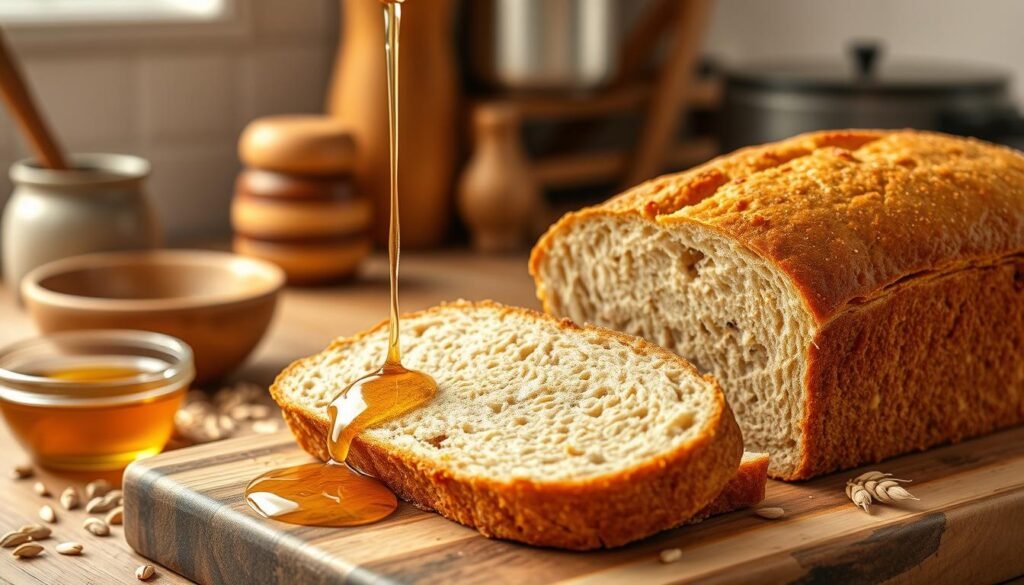
To make Outback honey wheat bread, you need to make small changes. Use molasses for color and honey for sweetness. Keep whole wheat low to keep the bread light.
| Item Name | Description | Calories | Price |
|---|---|---|---|
| Mini Honey-Wheat Loaf | Small, soft loaf with honey and mild molasses notes | 220 per serving | $0.95 |
| Classic Molasses Mix | Deeper color and rich caramel flavor | 240 per serving | $1.05 |
| Low-Sugar Version | Reduced honey and molasses, egg for richness | 180 per serving | $0.88 |
| High-Wheat Rustic | Higher whole wheat for pronounced grain flavor | 260 per serving | $1.10 |
| Buttered Mini Loaf | Served warm with whipped butter | 300 per serving | $1.35 |
| Honey-Forward Roll | More honey, less molasses for floral notes | 210 per serving | $0.99 |
| Family-Sized Pan | Larger loaf for slicing and serving | 230 per serving | $3.50 |
| Quick-Start Dough | Faster proof with higher yeast | 235 per serving | $1.20 |
| Restaurant-Style Portion | Miniature loaf shaped for table service | 225 per serving | $0.98 |
| Evening Special Loaf | Balanced honey and molasses, brushed with butter | 245 per serving | $1.15 |
Adjusting molasses versus honey: start with a 3/4 cup molasses and 2–4 tablespoons honey for the closest hue and depth in an outback bread recipe. If color seems too dark, reduce molasses in 2-tablespoon steps and add honey to keep sweetness without deepening color.
For a lighter, brighter flavor, swap some molasses for extra honey. If you want a pronounced caramel note, keep molasses higher. These swaps guide a faithful outback bread copycat while letting you tune taste and tone.
Whole wheat ratio: aim for a 1:4 to 1:5 whole wheat-to-white flour mix. That level keeps chew and crumb soft. Pushing whole wheat above 20–30% will darken the loaf and increase density. Compensate by raising hydration by 5–10% and kneading longer to build gluten.
When you increase whole wheat, give the dough a 10–15 minute extra rest after initial mixing. This autolyse step soaks bran and reduces tearing. The result is a more open crumb even with higher whole wheat content.
Sweetness controls for lower-sugar versions: cut brown sugar and molasses gradually and test texture. Many home bakers drop brown sugar and keep a small amount of molasses for color and moisture. If you remove much sugar, add one small egg or a tablespoon of milk powder to preserve tenderness.
For a low-sugar outback bread copycat, halve the honey and reduce molasses by one-third. Expect a paler loaf with slightly less softness. Offset that change with a short butter brush after baking to improve mouthfeel.
- Tip: Weigh ingredients for consistent outback bread recipe results.
- Tip: Use instant yeast for faster, predictable rise.
- Tip: Warm liquid between 100–110°F to protect yeast activity with sweet doughs.
These adjustments help you hit the sweet, wheaty balance that defines Outback-style loaves while keeping the recipe flexible for home ovens and dietary tweaks.
Nutritional profile and outback bread calories
Outback-style mini loaves are rich because they have butter, eggs, honey, and molasses. These ingredients shape the outback bread ingredients. They also determine the nutrition you get when you order or bake at home.
Mini loaf sizes vary, so their calories do too. A small dinner-roll portion is about 180 calories. A larger, enriched mini loaf can have up to 300 calories, depending on the butter and egg content.
Here’s a table with common menu items, their descriptions, calorie values, and price ranges. You might see these at casual steakhouses or in home-copycat recipes.
| Item Name | Description | Calories | Price |
|---|---|---|---|
| Mini honey-wheat loaf | Soft interior with honey and molasses for color | 200–240 kcal | $0.75–$1.50 |
| Dinner roll (enriched) | Egg and butter enrichments, tender crumb | 220–280 kcal | $0.90–$1.75 |
| Small whole wheat roll | Higher whole-grain ratio, denser crumb | 180–220 kcal | $0.80–$1.40 |
| Buttered mini loaf | Served warm with whipped butter topping | 240–300 kcal | $1.00–$2.00 |
| Copycat Aunt Jo roll (home) | Closer to restaurant texture, variable size | 200–260 kcal | $0.50–$1.20 |
| Reduced-butter version | Less fat, drier crumb | 160–200 kcal | $0.60–$1.30 |
| Large dinner-roll portion | Hearty serving, often brushed with butter | 260–320 kcal | $1.20–$2.20 |
| Frozen-dough reheated roll | Commercially produced, consistent size | 200–250 kcal | $0.70–$1.50 |
| Whole grain specialty roll | Added bran or seeds for texture and fiber | 190–230 kcal | $1.00–$2.00 |
| Low-sugar adaptation | Reduced honey/molasses for lower sweetness | 170–210 kcal | $0.65–$1.40 |
Macronutrients change with recipe choices. A 200–220 kcal roll has 30–36 grams of carbs, 6–9 grams of fat, and 5–7 grams of protein. These values reflect common ingredients like bread flour, whole wheat, butter, eggs, honey, and molasses.
Allergen notes are important. Standard recipes include wheat (gluten), eggs, and dairy from butter. Restaurants might use shared equipment, increasing the risk of cross-contact with nuts or other allergens.
Dietary swaps can alter texture and nutrition. Gluten-free flours need stabilizers and often increase calories. Vegan swaps remove eggs and dairy, using plant-based fats that change the crumb structure and calories.
Use this info to compare menu choices and adjust homemade recipes. This way, you can get the outback bread nutrition and ingredients you prefer.
Baking techniques restaurants use vs home baking
Restaurants focus on speed and consistency. They often use frozen, partially baked dough that they thaw and finish on-site. This method helps keep loaves uniform and saves on labor costs. You can apply these steps to improve your home baking.
Here’s a quick look at how restaurants and home bakers differ. The table shows how each choice affects the bread’s texture, timing, and crust.
| Item Name | Description | Calories | Price |
|---|---|---|---|
| Frozen, par-proofed mini loaf | Partially risen, frozen for transport, finished in-restaurant | 200 per mini loaf | $0.60 per serving |
| Freshly mixed bread dough | Made from scratch, longer fermentation, variable size | 220 per mini loaf | $0.80 per serving |
| Retarded dough (overnight) | Cold fermentation to deepen flavor and improve crumb | 215 per mini loaf | $0.75 per serving |
| Pre-baked, thaw-and-heat rolls | Fully baked off-site, reheated before service | 195 per mini loaf | $0.65 per serving |
| High-protein bread flour mix | Stronger gluten for chewier texture and oven spring | 210 per mini loaf | $0.70 per serving |
| Butter-brushed finish | Brushing hot loaves for sheen and softer crust | adds ~25 calories | $0.05 per serving |
| Baking stone or preheated sheet | Improves oven spring and bottom crust color | 0 (tool) | $25–$60 one-time |
Restaurants use frozen dough to ensure consistent quality. They thaw, finish the rise, bake, and brush with butter. This method saves labor and reduces waste.
Home bakers can achieve similar results with a few tweaks. Use high-protein flour and knead well to build gluten. Chill the dough overnight for richer flavor. Then, warm proof, bake with steam, and brush with butter right from the oven.
Tools greatly impact baking results. A baking stone or preheated sheet enhances oven spring and crust color. Glass pans brown the bottom crust faster than metal. An oven thermometer ensures accurate baking temperatures.
To get a restaurant-like texture, try these steps: mix for a gluten window, bulk ferment until doubled, chill overnight, shape into small loaves, and finish with a brief warm proof. Steam the first 6–8 minutes for a glossy crust and open crumb.
Small changes can make a big difference. By adopting outback bread baking techniques and understanding frozen dough logistics, home baking can get closer to the restaurant quality.
- Use bread flour and extra kneading for structure.
- Retard dough overnight for flavor depth.
- Bake on a preheated stone, add steam, brush with butter hot.
- Slice with a serrated knife for clean edges.
Now it’s your turn to experiment. Small adjustments in proofs, pans, and finishing touches can greatly improve your bread’s texture, color, and taste.
Serving, presentation, and pairing ideas
Outback’s honey-wheat loaf shines when served with care. Small touches can make a big difference. Simple steps can enhance aroma, texture, and taste without extra effort.
Whipped butter is a classic choice. It softens the loaf and melts on warm slices. For a twist, try honey-cinnamon or herb-garlic butters for sweet or savory dishes.
Brushing loaves with melted butter adds shine and scent. Sprinkle flaky sea salt on savory spreads for an extra touch. These steps make the bread more appealing.
| Item Name | Description | Calories | Price |
|---|---|---|---|
| Mini Honey-Wheat Loaf | Warm, soft crumb with a honey-molasses finish | 220 per loaf | $2.50 |
| Whipped Salted Butter | Light, airy butter that spreads easily | 90 per tbsp | $0.50 |
| Honey-Cinnamon Butter | Sweet compound butter for dessert-style pairing | 110 per tbsp | $0.75 |
| Garlic-Herb Butter | Savory compound butter for grilled meats | 100 per tbsp | $0.75 |
| Brushed Melted Butter Finish | Enhances crust and aroma on fresh loaves | 15 per brush | $0.25 |
| Two-Loaf Table Presentation | Pair of uniform mini loaves presented in a branded dish | 440 combined | Included |
| Takeout Bonus Loaf | Single loaf added to carryout orders | 220 | Included |
| Steakhouse Pairing Plate | Loaf with compound butter and parsley garnish | 325 | $3.50 |
| Soup Combo | Loaf served with French onion or chili | 300 | $4.00 |
| Salad Side Loaf | Mini loaf paired with robust vinaigrette salads | 230 | $2.75 |
Pair the loaf with main dishes for the best taste. A sweet loaf complements steak. Grilled chicken and pork pair well with its warmth. Soups and salads find balance with outback bread.
Offering two or three mini loaves per table feels generous. Uniform size and a clean butter dish show care. Packing a loaf with takeout delights customers and encourages return visits.
Staff presentation is key. Serve on warm plates with a butter ramekin on top. This elevates the bread while keeping service smooth. Clear, consistent service makes the loaf unforgettable.
- Whipped butter: soft spread, fast melt.
- Honey-cinnamon: dessert-style lift.
- Herb-garlic: savory steak companion.
- Warm-brushed crust: aroma and shine.
These strategies enhance outback bread serving and table appeal. Thoughtful pairings and presentation turn a simple loaf into a memorable experience.
Common copycat pitfalls and how to avoid them
Making an outback bread copycat at home is all about matching the taste and texture. Home kitchens don’t have the same tools as commercial bakeries. This is why recipes might not turn out the same.
Many mistakes happen because of how you mix the ingredients or the technique. Simple steps can fix sticky dough, a dense crumb, or an off-taste. Use the checklist and table below to find and fix common problems.
Sticky dough
- Cause: Under-kneading or adding too much liquid at once.
- Fix: Add flour slowly while kneading. The dough should feel slightly tacky.
- Tip: Rest the dough 5–10 minutes if it feels stretchy before adding more flour.
Dense crumb
- Cause: Under-proofing or too high a percentage of whole wheat flour.
- Fix: Let the dough double in size. Use warm, draft-free proofing. Keep whole wheat under 25–30% unless you add extra hydration.
- Tip: Test readiness by pressing gently—indent should spring back slowly.
Overbrowning and crust issues
- Cause: Oven temperature too high or rack too close to heat source.
- Fix: Move the loaf to a lower rack or reduce bake time by 5–10 minutes. Brush with butter after baking for gloss without extra browning.
- Tip: Use an oven thermometer to verify true temperature.
Flavor mismatches
- Too much molasses can produce a bitter, cloying profile. Cut molasses slightly and add a touch of honey for brightness.
- Lack of wheat depth shows as flat, one-note sweetness. Increase whole wheat fraction modestly or add toasted wheat flour for nutty complexity.
- Balance both for the signature honey-wheat profile that defines the loaf.
| Item Name | Description | Calories | Price |
|---|---|---|---|
| Mini Honey-Wheat Loaf | Soft mini loaf with honey and light molasses notes. | 220 | $1.50 |
| Whipped Butter Portion | Light, creamy butter served warm. | 100 | $0.50 |
| Toasted Wheat Slice | Slice toasted for extra nutty aroma. | 240 | $1.75 |
| Honey-Glaze Finish | Thin brush of honey and butter after bake. | 40 | $0.25 |
| Whole Wheat Blend | 25% whole wheat flour for mild nutty flavor. | 210 | $0.90 |
| Molasses Touch | Small amount for color and background sweetness. | 35 | $0.10 |
| Service Mini Loaf | Portioned to mimic restaurant presentation. | 200 | $1.25 |
| Butter-Basted Crust | Light butter applied post-bake for sheen. | 60 | $0.30 |
| Warm Whole-Wheat Slice | Served warm to highlight aroma. | 230 | $1.60 |
| Standard Portion | Restaurant-style single serving. | 215 | $1.40 |
Use outback bread tips to fine-tune each bake. Track hydration, proof times, and oven placement. Avoid common mistakes by measuring, observing, and adjusting. Small changes can make a big difference in getting the loaf right.
Conclusion
Outback Steakhouse bread is a small honey-wheat loaf. It’s made from whole wheat and bread flour, sweetened with molasses and honey. It’s topped with whipped butter.
Restaurants use frozen dough and precise baking for uniform loaves. Home bakers can get close by balancing whole wheat and using molasses with a bit of honey.
To make outback bread at home, use tested ingredients and follow proofing times. Bake at 375°F until the loaf sounds hollow. Adding melted or whipped butter gives it the restaurant’s shine and richness.
Expect some texture differences from the restaurant version. This is unless you replicate their dough handling.
Follow the ingredient guide, proofing tips, and troubleshooting advice in this article. Make your first batch of outback honey wheat bread. Adjust the molasses-to-honey ratio and whole wheat percentage to get the color, sweetness, and crumb density you like.
FAQ
What ingredients give Outback Steakhouse bread its deep brown color and mildly sweet flavor?
The bread’s color and taste come from molasses and a bit of honey. Whole wheat flour adds a nutty flavor and darker crumb. Bread flour helps with structure. Eggs, butter, and brown sugar are common in home recipes, making the bread richer and softer.
Is there an official Outback bread recipe I can follow to get identical results at home?
No public recipe will perfectly match the restaurant’s bread. Chains use frozen dough and special conditioners that affect texture. Home recipes, like Aunt Jo’s, get close in flavor but can’t fully replicate the restaurant’s finish.
What are the typical ingredients and measurements used in popular copycat recipes?
Common ingredients include eggs, 3/4 cup molasses, and 2–4 tablespoons honey. You’ll also need 1/4 cup brown sugar, 1/2 cup butter, and two packages of yeast. Use 1 1/4 cups warm water, 1 cup whole wheat flour, and 5–6 cups bread flour. The size of the loaves can vary.
How should I proof and bake the loaves to mimic Outback’s texture?
Start by softening yeast in warm water until it’s bubbly. Mix the yeast with eggs and sweeteners, then add flours to make a dough. Let it rise for 1–2 hours until it doubles in size.
FAQ
What ingredients give Outback Steakhouse bread its deep brown color and mildly sweet flavor?
The bread’s color and taste come from molasses and a bit of honey. Whole wheat flour adds a nutty flavor and darker crumb. Bread flour helps with structure. Eggs, butter, and brown sugar are common in home recipes, making the bread richer and softer.
Is there an official Outback bread recipe I can follow to get identical results at home?
No public recipe will perfectly match the restaurant’s bread. Chains use frozen dough and special conditioners that affect texture. Home recipes, like Aunt Jo’s, get close in flavor but can’t fully replicate the restaurant’s finish.
What are the typical ingredients and measurements used in popular copycat recipes?
Common ingredients include eggs, 3/4 cup molasses, and 2–4 tablespoons honey. You’ll also need 1/4 cup brown sugar, 1/2 cup butter, and two packages of yeast. Use 1 1/4 cups warm water, 1 cup whole wheat flour, and 5–6 cups bread flour. The size of the loaves can vary.
How should I proof and bake the loaves to mimic Outback’s texture?
Start by softening yeast in warm water until it’s bubbly. Mix the yeast with eggs and sweeteners, then add flours to make a dough. Let it rise for 1–2 hours until it doubles in size.
Can I make the bread gluten-free, vegan, or keto-friendly?
FAQ
What ingredients give Outback Steakhouse bread its deep brown color and mildly sweet flavor?
The bread’s color and taste come from molasses and a bit of honey. Whole wheat flour adds a nutty flavor and darker crumb. Bread flour helps with structure. Eggs, butter, and brown sugar are common in home recipes, making the bread richer and softer.
Is there an official Outback bread recipe I can follow to get identical results at home?
No public recipe will perfectly match the restaurant’s bread. Chains use frozen dough and special conditioners that affect texture. Home recipes, like Aunt Jo’s, get close in flavor but can’t fully replicate the restaurant’s finish.
What are the typical ingredients and measurements used in popular copycat recipes?
Common ingredients include eggs, 3/4 cup molasses, and 2–4 tablespoons honey. You’ll also need 1/4 cup brown sugar, 1/2 cup butter, and two packages of yeast. Use 1 1/4 cups warm water, 1 cup whole wheat flour, and 5–6 cups bread flour. The size of the loaves can vary.
How should I proof and bake the loaves to mimic Outback’s texture?
Start by softening yeast in warm water until it’s bubbly. Mix the yeast with eggs and sweeteners, then add flours to make a dough. Let it rise for 1–2 hours until it doubles in size.
How many calories are in a typical mini Outback-style loaf or copycat roll?
FAQ
What ingredients give Outback Steakhouse bread its deep brown color and mildly sweet flavor?
The bread’s color and taste come from molasses and a bit of honey. Whole wheat flour adds a nutty flavor and darker crumb. Bread flour helps with structure. Eggs, butter, and brown sugar are common in home recipes, making the bread richer and softer.
Is there an official Outback bread recipe I can follow to get identical results at home?
No public recipe will perfectly match the restaurant’s bread. Chains use frozen dough and special conditioners that affect texture. Home recipes, like Aunt Jo’s, get close in flavor but can’t fully replicate the restaurant’s finish.
What are the typical ingredients and measurements used in popular copycat recipes?
Common ingredients include eggs, 3/4 cup molasses, and 2–4 tablespoons honey. You’ll also need 1/4 cup brown sugar, 1/2 cup butter, and two packages of yeast. Use 1 1/4 cups warm water, 1 cup whole wheat flour, and 5–6 cups bread flour. The size of the loaves can vary.
How should I proof and bake the loaves to mimic Outback’s texture?
Start by softening yeast in warm water until it’s bubbly. Mix the yeast with eggs and sweeteners, then add flours to make a dough. Let it rise for 1–2 hours until it doubles in size.
What common mistakes make a home copycat loaf dense or overly dark, and how do I fix them?
FAQ
What ingredients give Outback Steakhouse bread its deep brown color and mildly sweet flavor?
The bread’s color and taste come from molasses and a bit of honey. Whole wheat flour adds a nutty flavor and darker crumb. Bread flour helps with structure. Eggs, butter, and brown sugar are common in home recipes, making the bread richer and softer.
Is there an official Outback bread recipe I can follow to get identical results at home?
No public recipe will perfectly match the restaurant’s bread. Chains use frozen dough and special conditioners that affect texture. Home recipes, like Aunt Jo’s, get close in flavor but can’t fully replicate the restaurant’s finish.
What are the typical ingredients and measurements used in popular copycat recipes?
Common ingredients include eggs, 3/4 cup molasses, and 2–4 tablespoons honey. You’ll also need 1/4 cup brown sugar, 1/2 cup butter, and two packages of yeast. Use 1 1/4 cups warm water, 1 cup whole wheat flour, and 5–6 cups bread flour. The size of the loaves can vary.
How should I proof and bake the loaves to mimic Outback’s texture?
Start by softening yeast in warm water until it’s bubbly. Mix the yeast with eggs and sweeteners, then add flours to make a dough. Let it rise for 1–2 hours until it doubles in size.
How can I replicate the restaurant’s whipped-butter pairing and presentation at home?
FAQ
What ingredients give Outback Steakhouse bread its deep brown color and mildly sweet flavor?
The bread’s color and taste come from molasses and a bit of honey. Whole wheat flour adds a nutty flavor and darker crumb. Bread flour helps with structure. Eggs, butter, and brown sugar are common in home recipes, making the bread richer and softer.
Is there an official Outback bread recipe I can follow to get identical results at home?
No public recipe will perfectly match the restaurant’s bread. Chains use frozen dough and special conditioners that affect texture. Home recipes, like Aunt Jo’s, get close in flavor but can’t fully replicate the restaurant’s finish.
What are the typical ingredients and measurements used in popular copycat recipes?
Common ingredients include eggs, 3/4 cup molasses, and 2–4 tablespoons honey. You’ll also need 1/4 cup brown sugar, 1/2 cup butter, and two packages of yeast. Use 1 1/4 cups warm water, 1 cup whole wheat flour, and 5–6 cups bread flour. The size of the loaves can vary.
How should I proof and bake the loaves to mimic Outback’s texture?
Start by softening yeast in warm water until it’s bubbly. Mix the yeast with eggs and sweeteners, then add flours to make a dough. Let it rise for 1–2 hours until it doubles in size.
Where do popular copycat recipes like Aunt Jo’s come from, and how reliable are they?
FAQ
What ingredients give Outback Steakhouse bread its deep brown color and mildly sweet flavor?
The bread’s color and taste come from molasses and a bit of honey. Whole wheat flour adds a nutty flavor and darker crumb. Bread flour helps with structure. Eggs, butter, and brown sugar are common in home recipes, making the bread richer and softer.
Is there an official Outback bread recipe I can follow to get identical results at home?
No public recipe will perfectly match the restaurant’s bread. Chains use frozen dough and special conditioners that affect texture. Home recipes, like Aunt Jo’s, get close in flavor but can’t fully replicate the restaurant’s finish.
What are the typical ingredients and measurements used in popular copycat recipes?
Common ingredients include eggs, 3/4 cup molasses, and 2–4 tablespoons honey. You’ll also need 1/4 cup brown sugar, 1/2 cup butter, and two packages of yeast. Use 1 1/4 cups warm water, 1 cup whole wheat flour, and 5–6 cups bread flour. The size of the loaves can vary.
How should I proof and bake the loaves to mimic Outback’s texture?
Start by softening yeast in warm water until it’s bubbly. Mix the yeast with eggs and sweeteners, then add flours to make a dough. Let it rise for 1–2 hours until it doubles in size.